“Shelter to lay head is a necessity, while a Mosque to observe daily prayers is more important to a Muslim.”
How it began
SEMRA — Suncity Estate Muslim Residents Association — started as a small gathering of a few Muslim residents who laid their mats on the ground and observed daily prayers in a parking lot on the Streets of Pomona, donated by one of the brothers. From that humble beginning, the community has grown into a large fellowship of Muslim residents in Suncity Estate and is becoming a top-notch Islamic learning centre in Abuja.
Briefly after Ṣalāt al-ʿIshāʾ one evening, as worshippers left the masjid to retire home, this account was shared first-hand by one of the early pioneers of the association.
2005 — An estate without a mosque
Sixteen years before this history was written, in 2005, the Nigerian government embarked on large-scale demolition exercises aimed at restoring the “distorted masterplan” of Abuja. The ambition to rebuild the Federal Capital Territory ushered a swift housing crisis: many lost shelter, shops, and livelihoods.
In that climate, Suncity Estate was commissioned at Galadimawa along Airport Road. Only one phase was fully developed, yet Suncity was an emerging and promising estate — and demand for housing was high. Muslim residents were worried: there was no mosque in Suncity where they could observe their daily prayers.
Water for ablution came from an overhead tank down Pomona Street that served Phase One. Later, a Muslim brother became the first to construct a borehole in his house after securing approval.
Those who drove kilometres to Area One and the National Mosque to pray — often on roads surrounded by bushes, especially at early hours. For Jumuʿah, many prayed at their workplaces. As Muslim residents multiplied with the expansion of Suncity, the need for a mosque in the estate became urgent.
Negotiations with the developers
A few members of SEMRA met Adkan Services Nigeria Limited, the developers of Suncity, to discuss constructing a masjid. The estate’s approved plan with the Federal Capital Development Authority (FCDA) already included a mosque design — yet Adkan was not ready to commence the project. Appeals from 2005 to 2008 did not yield a positive result. Commercial infrastructure — schools, hospitals, shopping complex, gas station — took priority; a mosque as a charitable cause did not.
Christian residents had earlier asked Adkan to build a church carcass (skeletal structure up to the roof) and hand it over for completion — an idea the developers welcomed. Muslims proposed the same for the SEMRA masjid; it was accepted in principle but not fulfilled afterwards.
At one point Adkan advised SEMRA to raise funds and contract them to build the mosque. SEMRA replied that funds would be donated by members and contracts awarded through transparent vetting — and that if Adkan bid and won, the work could be awarded to them, notwithstanding that building and handing over the mosque was their original mandate.
For obvious reasons the developers were not optimistic about building two churches in the estate for Roman Catholics and Protestants; for Muslims, one masjid would serve the whole community. Residents waited patiently with hope in Allah, determined to maintain peaceful coexistence with their neighbours.
2009 — SEMRA becomes a legal association
Members decided it was ideal to incorporate SEMRA officially with the Corporate Affairs Commission (CAC). By 2009, SEMRA was registered. The appeal to build a mosque had transcended individual Muslims; it was now the voice of a recognised association.
-
2005
Prayers on Pomona Street
Suncity Estate is commissioned. Muslim residents begin daily prayers on mats in a donated car-park lot — no mosque yet in the estate.
-
2005–2008
Long talks with Adkan
Repeated appeals for a masjid on the master-planned site. Design exists on paper; construction does not begin.
-
2009
CAC registration
SEMRA is officially registered — the community’s request now carries legal standing.
-
2012
Temporary mosque at Niger Street
Adkan advises a temporary place of worship on the allocated land. SEMRA raises an aluminium-and-roofing-sheet structure at No. 2 Niger Street. First Ramaḍān observed there.
-
2019
Design handed over
After thirteen years of unfulfilled promises, Adkan finally hands SEMRA the architectural design to build on the allocated land.
-
Today
850-capacity Islamic Centre
SEMRA is building a state-of-the-art Islamic centre at No. 2 Niger Street, supported by a charity foundation from Qatar.
2012 — A roof of our own
By 2012, following uncompromising effort, Adkan advised SEMRA to construct a temporary place of worship at a parking lot on the land allocated for the mosque in the master plan. SEMRA quickly mobilised labour and raised a temporary structure using aluminium and roofing sheets.
At completion, the community relocated from Pomona Street to No. 2 Niger Street, where Muslims have prayed to this day. The first Ramaḍān fasting was observed in the newly constructed temporary mosque in 2012. A sister living opposite the masjid supported the community tremendously with Ramaḍān iftār — seventy packs of meals every day throughout the fasting period.
2019 — The design, at last
For thirteen years Adkan Services Nigeria neither constructed a mosque as proposed nor released the design to SEMRA. In 2019, after continued engagement, the developers finally handed over the architectural design so SEMRA could build a masjid on the allocated land.
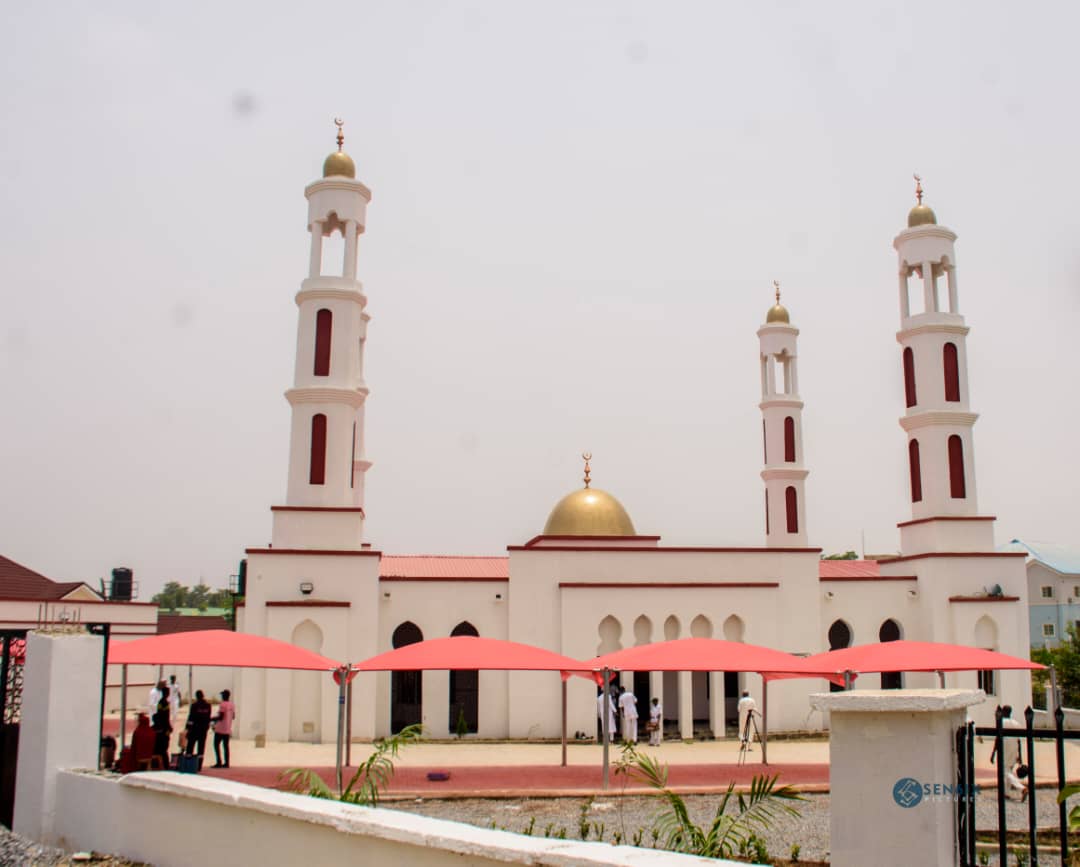
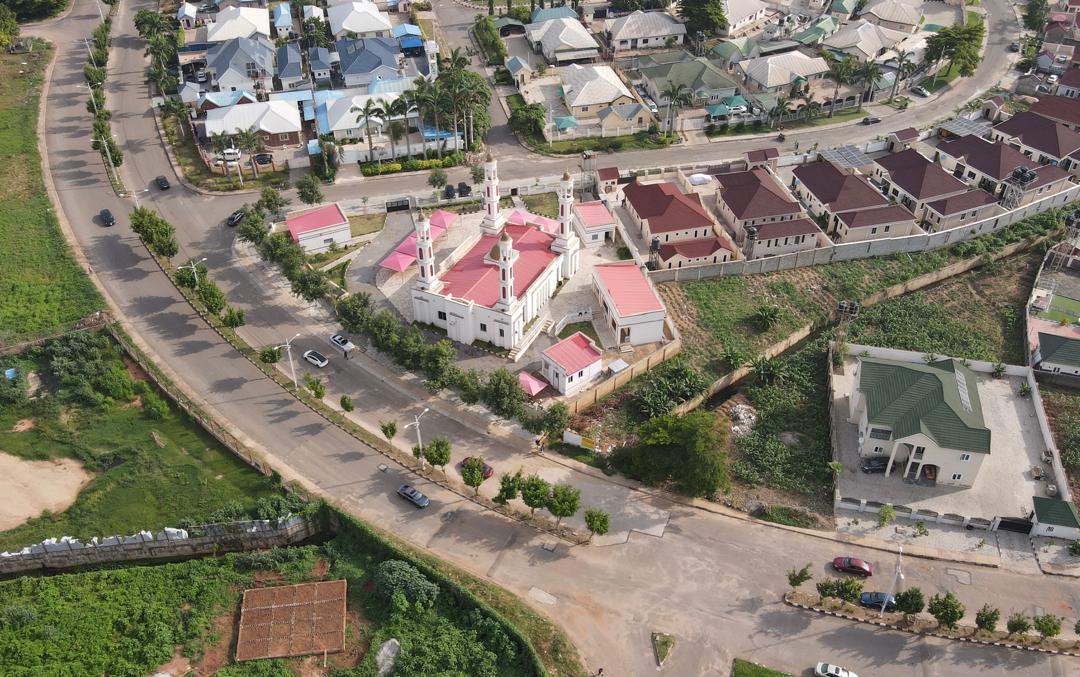
Terms were agreed by both parties. By the help of Almighty Allah, SEMRA is currently building an 850-capacity state-of-the-art Islamic Centre at No. 2 Niger Street, Suncity Estate, Abuja — supported by a charity foundation from Qatar.
Unity, patience, and submission
The journey from where we came from to where we are now has not been easy — but we remain optimistic about the future. Islam means total submission; Muslims submit to the Will of Allah in every situation. The love and unity we share as a community, regardless of our diversity, constantly inspire us to strive for the common good of our association while preserving the values of our noble religion in the worship of Almighty Allah.